
by Christian International | Apr 8, 2025 | Articles
Life is filled with unexpected moments—some beautiful, others incredibly painful. As believers, we hold on to the truth that no matter what comes, God is still sovereign, and His plans are ultimately for our good. Romans 8:28 reminds us:
“And we know that in all things God works for the good of those who love him, who have been called according to his purpose.”
What followed in my life was a season I never saw coming—but one that God used to deepen my dependence on Him.
In 2023, I experienced two life-altering events that tested my faith, patience, and physical strength.
One morning, after dropping my dad off at the airport—a routine drive I had done countless times—I turned into my neighborhood, just as I always had. But this time, a car came speeding toward me without headlights. The impact was devastating. My car spun. The other car rolled. I was left with six broken bones—my pelvis, back, and rib were fractured—and my life came to a sudden halt.
In an instant, my carefully laid plans vanished. The months ahead turned into a journey of hospitals, healing, and pain management. I had no choice but to surrender control.
Then in November, while putting up Christmas lights, another freak accident struck. I fell from a step stool and landed hard on my right ankle. The break was severe and required surgery, leaving me with a metal plate and five screws. Bedridden again. More plans canceled. More time away from everything I had hoped to enjoy with family and ministry.
Can I explain why this all happened? No.
Did I get some grand revelation in the middle of it all? Honestly, no.
But I clung to the promises of God. I leaned into His Word. I reminded myself daily that God doesn’t waste pain. Even when we don’t understand, He is working behind the scenes—bringing good out of hardship and drawing us closer to Him.
Sometimes the revelation is not in the reason, but in the result: a deeper trust, a clearer voice, a stronger spirit.
And yes—I’ve said it more than once:
“This too shall pass. It may pass like a kidney stone, but it will pass.”
That little bit of humor carried me through more than a few painful days.
I once heard this wisdom:
“Plan your life like you’re going to live to be 100. Live your life like Jesus is coming tomorrow.”
That stayed with me.
We all face trials—physical, emotional, mental, and spiritual. Just as the body can be broken and slowly rebuilt, so can the soul. Healing is a process. It takes time. There are scars. There are adjustments. Even now, my back still aches if I stand too long. I walk with a slight limp.
But I’m walking. I’m serving. I’m moving forward by the grace of God.
To anyone going through their own storm: hold on. Be patient. Trust in the slow, steady work of healing that God is doing in you. He is near to the brokenhearted (Psalm 34:18), and He promises never to leave or forsake you (Hebrews 13:5).
No matter how difficult things look at the moment, don’t lose hope. Keep your peace. Stay patient with long-suffering. One day, you will look back on this and either laugh or use it to help someone else walk through a similar trial. It will become part of your testimony—a teaching and maturing experience that God uses to conform you into the likeness and image of Christ Jesus (Romans 8:29).
Psalm 30:5 says:
“Weeping may endure for a night, but joy comes in the morning.”
Worrying about something will not change it. Scripture tells us not to worry:
“Therefore do not worry about tomorrow, for tomorrow will worry about itself. Each day has enough trouble of its own” (Matthew 6:34).
Sometimes we have to take one day at a time, one hour at a time, or even one minute at a time. If you dwell too much on the future, it can become overwhelming and discouraging.
In those moments, I sing the old hymn:
“One day at a time, sweet Jesus, that’s all I’m asking of You. Just give me the strength to do every day what I have to do.”
And I pray—continually.
There are times when all you can do is whisper prayers under your breath or in your heart. Keep your mind fixed on Christ, and resist the urge to spiral into fear or doubt.
“Rejoice always, pray continually, give thanks in all circumstances; for this is God’s will for you in Christ Jesus.”(1 Thessalonians 5:16–18)
This too shall pass.
And when it does, you’ll emerge stronger, wiser, and more rooted in the faithfulness of your God.
You are not alone.
Keep the faith.
Keep walking.

by Christian International | Apr 2, 2025 | Articles
Finding Our True Identity in Christ
In today’s world, identity is a major topic of discussion. People often ask, “What do you identify as?” or “Where do you find your identity?” The concept of identity shapes how we see ourselves and how we interact with the world around us.
What is Identity?
The dictionary defines identity as “the distinguishing character or personality of an individual.” But as Christians, our identity is not rooted in worldly definitions—it is found in Christ. We are continually transitioning into His likeness and image (2 Corinthians 3:18).
Where Do We Find Our Worth?
It’s natural to find comfort and security in the roles we hold. Personally, I have found great joy and purpose in being a mother and grandmother. My family, my parents, brothers, children, and grandchildren—has been a source of stability and strength for me.
However, Jesus gives us a sobering reminder in Matthew 10:37:
“He that loveth father or mother more than me is not worthy of me: and he that loveth son or daughter more than me is not worthy of me.”
This does not mean we should love our families any less, but rather, that our ultimate worth, security, and trust must be found in Christ alone.
Identity Built on the Fruit of the Spirit
Our character and identity as believers are shaped by the fruit of the Spirit:
“But the fruit of the Spirit is love, joy, peace, longsuffering, gentleness, goodness, faith, meekness, temperance: against such there is no law.” — Galatians 5:22-23
Some people find their identity in wealth, success, or recognition. Others build their worth on titles and positions—whether in ministry or the corporate world. But being a pastor, evangelist, teacher, prophet, or apostle is not an identity; it is a calling. These roles are responsibilities given by God for the purpose of perfecting and equipping the saints for the work of the ministry. (Ephesians 4:11-12).
Likewise, positions such as CEO, manager, supervisor, or leader in any field can be blessings. However, if our security is found in promotions, financial success, or public acknowledgment, we will always be left wanting. Instead, we are called to do everything unto the Lord:
“And whatsoever ye do, do it heartily, as to the Lord, and not unto men.” — Colossians 3:23
A Testimony of True Identity
My father, Bishop Bill Hamon, gave his life to Jesus at a small brush arbor meeting with just a few teenagers in an open field in Oklahoma. The woman who ministered that night may never have known the impact of her obedience. If her identity had been based on large crowds, financial support, or public recognition, she might have felt like a failure.
But because her identity was in Christ, her worth was found in His grace and mercy. And in the end, her reward in heaven will be just as great as my father’s—because she was faithful to her calling. This is the essence of finding our fulfillment in God rather than in earthly success.
You never know if that one person you are talking to and helping will change thousands of lives. God has called us to be obedient in the seemingly small things as much as the seemingly large more noticeable things. Obedience will help to form our character and our identity.
The Danger of Misplaced Identity
When we place our identity in people, fame, fortune, or material possessions—even in our families and mentors—we will inevitably face disappointment. These things are temporary, but our identity in Christ is eternal.
My True Identity
At the end of the day, I identify as a Christian—someone who is being transformed into the likeness and image of Christ. From glory to glory, I seek to reflect His character through the fruit of the Spirit in my life.
May we all find our true identity, worth, security, and purpose in Him alone.

by admin | Feb 1, 2025 | Articles
A message from the CEO of Christian International Sherilyn Hamon Miller:
In every season of life, God has placed a unique calling on each of us. To fulfill it, we must remain focused and obedient, refusing to be distracted by comparison or discouraged by the opinions of others. Stay on task. Do what God has called you to do, trusting that His plan is purposeful, even when it doesn’t make sense or seems insignificant.
The Loneliness of Obedience
There are times when obedience to God feels isolating. Like Adam in the garden, walking and talking with God daily, you may still feel alone in your assignment. Adam’s task of naming animals and tending the garden might have seemed mundane, but it was part of God’s divine plan.
Scripture reminds us of God’s concern for our need for companionship:
“And the LORD God said, It is not good that the man should be alone; I will make him a help meet for him.” (Genesis 2:18)
We were created to need one another. Godly relationships provide accountability, encouragement, and correction—helping us see blind spots we cannot recognize on our own. This mirrors how a car’s side mirror reveals what’s hidden in our blind spots, preventing collisions and accidents in life. Similarly, God often uses others to keep us aligned with His will.
Preparation in Obscurity
Throughout the Bible, God used seasons of obscurity and loneliness to prepare His people for greater assignments:
- Noah: Faithful in Obedience
Noah’s story is a powerful example of staying on task even when the world doesn’t understand. God called Noah to do something extraordinary—build an ark to save humanity and the animal kingdom from a flood, even though no one had ever seen rain. Imagine the loneliness Noah must have felt as he followed God’s instructions.
Noah’s obedience was met with ridicule. People mocked him as he built the massive ark. Imagine how he felt as his wife and children were made fun of and bullied because of his obedience. Yet, Noah remained faithful. Day by day, he followed God’s blueprint, trusting in His plan. His faith and perseverance led to the preservation of the human race and a new covenant with God.
“By faith Noah, being warned of God of things not seen as yet, moved with fear, prepared an ark to the saving of his house.” (Hebrews 11:7)
- Daniel and the Lions’ Den, Shadrach, Meshach and Abednego and the Fiery Furnace: Courage in Faith
Daniel’s unwavering obedience led him to a den of lions, where his life hung in the balance. Likewise, Shadrach, Meshach, and Abednego faced the fiery furnace for refusing to bow to an idol. Alone and surrounded by threats, they trusted God completely. What seemed like their destruction became a divine testimony of God’s power. Their faith not only saved them but also turned the hearts of kings and nations toward the one true God.
- Paul: Perseverance in Suffering
Paul endured imprisonment, beatings, and betrayal while carrying out God’s mission. Despite the isolation of a prison cell, Paul worshiped God, stayed on task, and shared the gospel. His faithfulness planted seeds for the church that continue to grow today.
- Mary, Mother of Jesus: Obedience Amid Doubt
Mary carried the Son of God, but she likely faced judgment and doubt from those around her. Even Joseph, her fiancé, initially struggled to believe her miraculous story. Imagine how he must have felt hearing his betrothed was pregnant. Yet Mary and Joseph trusted God’s calling, knowing their obedience was part of His eternal plan.
- Jesus: The Ultimate Example of Faithfulness
Jesus Himself exemplified staying on task, even in the face of betrayal, rejection, and unimaginable suffering. Though abandoned by His disciples and mocked by His own people, He carried out the will of the Father. Through the cross, He brought salvation to all humanity. His example reminds us to remain faithful, no matter the cost.
Avoid Comparison and Stay Faithful
It’s easy to look at others and feel inadequate or insignificant, especially in a culture obsessed with followers, likes, subscribers and accolades. But as followers of Christ, our goal is not fame or recognition. Not to have the biggest church, largest podcast or worldwide ministry. It is to serve faithfully and be conformed to the image of Christ.
“His Lord said unto him, Well done, good and faithful servant; thou hast been faithful over a few things, I will make thee ruler over many things: enter thou into the joy of thy Lord.” (Matthew 25:23)
God does not measure success as the world does. He values faithfulness in the small things. Whether your calling is in the spotlight or in quiet obedience, trust that it is significant in His Kingdom.
Encouragement for the Journey
When you feel alone or insignificant, remember:
- God is with you. He has promised, “I will never leave you nor forsake you.” (Hebrews 13:5)
- Your obedience matters. God sees your faithfulness and will reward it in His time.
- You need others. Allow godly relationships to encourage and sharpen you.
- Trust God’s plan. He is preparing you for something greater, even in seasons of obscurity.
In closing, do not let discouragement or comparison derail you from fulfilling your divine calling. Stay on task. Keep your motives pure. Serve with humility, knowing that God’s approval is far greater than the applause of men. When we walk faithfully in our calling, we glorify God and fulfill His purpose for our lives.
One day, we will stand before Him and hear the words we all long for:
“Well done, good and faithful servant.

by admin | Nov 13, 2024 | Articles
Recently, I attended a celebration of my dad, Bishop Hamon’s 70 years of ministry and 90 years of life. During that time, I had a rare moment alone with Gordon Robertson, something unusual as I’m not usually the one hosting guest speakers. As we talked, Gordon remarked, “Oh, you’re the missing child.” This statement lingered with me, and as I prayed about its meaning, I sensed God giving me deeper insight.
Throughout the Bible, there are numerous accounts of children who seemed to be forgotten or overlooked, yet later emerged as central figures in God’s plan. These stories reveal that even when someone is left out, rejected, or underestimated, their destiny is often far greater than what others perceive. Two of the most notable examples are David, the shepherd boy who would become king, and Joseph, sold into slavery by his brothers, but destined to save them. These narratives follow a divine pattern where God brings forth greatness from obscurity. Let’s delve into these and other biblical stories of “missing” children who later fulfilled their God-given destinies.
David: The Overlooked Shepherd Who Became King
David’s story is a classic example of someone initially dismissed. When the prophet Samuel arrived to anoint one of Jesse’s sons as Israel’s next king, David wasn’t even invited to the gathering. His father paraded his seven older sons before Samuel, assuming one of them would be chosen. But none were God’s choice.
Samuel then asked, “Are these all the sons you have?” Only then did Jesse mention David, the youngest, who was out tending sheep (1 Samuel 16:11). Brought in from the fields, David was unexpectedly anointed as Israel’s future king. Though overlooked by his family, he was not forgotten by God.
David’s anointing speaks a profound truth: God sees potential where others do not. Though he was the youngest and least likely candidate, David went on to defeat Goliath, unify Israel, and establish a royal lineage that would lead to Jesus. His story is a powerful reminder that God’s plans often defy human expectations.
Joseph: The Forgotten Brother Who Became a Savior
Another powerful example is Joseph, the favored son of Jacob. His brothers, jealous of their father’s affection for him, sold Joseph into slavery and led Jacob to believe he was dead. For years, Joseph was “missing” from his family’s life, enduring hardship as a slave and later as a prisoner in Egypt.
Yet, as Joseph later told his brothers, “What you meant for evil, God meant for good” (Genesis 50:20). In time, Joseph rose to become second in command of Egypt, overseeing the nation’s resources during a severe famine. When his brothers came to Egypt seeking food, they did not recognize the brother they had once betrayed. But Joseph, filled with mercy, chose forgiveness over revenge, ultimately saving his family and being restored to them.
Joseph’s story is one of divine providence. Though forsaken by his family, God had a greater purpose for him. His journey shows us that, even in the darkest times, God’s plan is still unfolding, often hidden until the appointed time.
Moses: The Hidden Child Who Became a Deliverer
Moses was also a child who was “missing,” though in a different way. Born during Pharaoh’s decree that all Hebrew male babies be killed, Moses’ mother hid him for as long as she could. Eventually, she placed him in a basket and set him adrift on the Nile, where he was found and raised by Pharaoh’s daughter.
Though Moses grew up away from his people, God would later call him back to deliver the Israelites from Egyptian bondage. From the burning bush, God commissioned Moses to confront Pharaoh and lead His people to freedom. Like David and Joseph, Moses’ early removal from his family did not hinder him from playing a critical role in God’s redemptive plan.
Jephthah: The Rejected Son Who Became a Leader
The story of Jephthah, found in Judges 11, is another example of a child rejected by family, only to be called back for a greater purpose. Born to a prostitute, Jephthah was driven out by his half-brothers, who refused to share their inheritance with him. In exile, Jephthah became a leader of a band of outlaws.
When Israel faced oppression by the Ammonites, the elders sought Jephthah’s help. Despite his earlier rejection, Jephthah returned and led Israel to victory, becoming one of the judges who governed the nation during that time.
Samuel: The Child Dedicated and Called by God
Samuel’s story is unique in that he wasn’t physically “missing,” but his destiny was overlooked by others. Dedicated to the Lord by his mother, Hannah, Samuel grew up under the care of Eli the priest. Though he lived in the temple, Samuel’s prophetic calling was not immediately recognized.
One night, God called to Samuel as he slept. After several failed attempts to understand the source of the voice, Eli realized it was the Lord. From that point on, Samuel became a key prophet, eventually anointing both Saul and David as kings. Samuel’s life illustrates that even when others don’t see our potential, God’s calling remains true.
Conclusion: The Divine Pattern of Restoration
These biblical stories reveal a recurring theme of children who were overlooked, rejected, or forgotten, only to be restored and called to a higher purpose. David was left in the fields, Joseph was sold into slavery, Moses was hidden away, Jephthah was cast out, and Samuel was initially unrecognized. Yet, in each case, God orchestrated their return to the forefront to fulfill their destinies.
These stories remind us that God’s timing and plans often transcend our understanding. Even when we feel overlooked or insignificant, we can trust that God sees us and has a purpose for our lives. The “missing” child may be out of sight for a time, but in God’s eyes, they are never truly forgotten. When the time comes, they will be called forth to fulfill their destiny.

by Christian International | Apr 30, 2024 | Articles
These past few days have been disturbing in many ways. Yesterday, I was driving from the gym and a cop was behind me. I immediately got nervous. I wasn’t speeding or doing anything wrong, but with everything going on, it didn’t give me a safe feeling. The institution that is designed to protect and serve is tainted. It has been tainted by individuals. I want to speak into this from a different perspective than most people have been talking about it.
Racism can be undone in any individual
Racism can be undone in any individual Racism can be undone in any individual, and we can play a part in it right now. No person is born racist. People are taught racism from their family, environment, culture, and personal experiences. Their initial exposure to prejudice was not their choice. However, even if they have been exposed to that belief system, they have a choice. They can choose in each instance whether to reinforce the belief or break it down. So many have fallen into this system unintentionally, and now they continue walking it out. It will take continual, intentional desire and effort to break out of it.
Racism is a human value issue, not just a black and white issue
Racism is a human value issue, not just a black and white issue Discussing it primarily as a black and white issue creates a couple of problems: it discredits the voices of other skin tones and it draws a clear line between two enemies, distracting from the real problem. Now we’re focusing primarily on two polar opposites at war, missing that racism, or hatred of other skin tones, exists in all shades. For example, in the Caribbean culture, there is discrimination between lighter and darker-skinned Caribbeans. By continuing the “black and white” label of racism we keep lock people into categories rather than identifying with them as individuals. The real problem is the devaluing a human being, and robbing them of the image of God they were designed to represent. And the first step to solving the problem is discussing human beings as human beings rather than categorizing them by their color.
People behave like people, not like an ethnicity
People behave like people, not like an ethnicity The riots and the destruction that you’re seeing is not a race trying to get their way. It’s the anger and pain of injustice that human beings are internally walking in. Your outer world is a reflection of your inner world. Psychology teaches that anger is a secondary emotion to hurt, fear, and rejection. These humans are revealing the deep pain, rejection, fear, and hopelessness they feel and live with every day. They need empathy, to know that we understand that you’re angry and we care what happens to you.
There is an answer to these issues. The answer is not found in changing the systems or in a reconciliation church service. It’s solved at the dinner tables and in homes. I’m not talking about just talking about the issues at the table with your own family. I’m talking about inviting one another into our homes and connecting. It’s hard to label and categorize someone you’ve spent time with and gotten to know personally. Connection is the answer. This needs to happen on all sides.
There is hope and its found in each one of us doing our part. We have to let go of pre-existing mindsets and connect with someone different than us. CONNECTION BREEDS COMPASSION!
“Whoever claims to love God yet hates a brother or sister is a liar. For whoever does not love their brother and sister, whom they have seen, cannot love God, whom they have not seen.” 1 John 4:20
The solution to racism is not found in changing systems or reconciliation services.
In conclusion, as a society, we must recognize that racism is a learned behavior and can be undone through intentional effort. It is important to understand that racism is not limited to just the black and white binary, but it is a human value issue that affects all skin tones. The riots and destruction we are currently witnessing are a manifestation of anger and pain from longstanding injustices. The solution to racism is not found in changing systems or attending reconciliation services, but in connecting with people of different backgrounds on a personal level. By fostering connection, we can breed compassion and love, and ultimately work towards creating a more just and equitable society for all.
by Christian International | Apr 30, 2024 | Articles
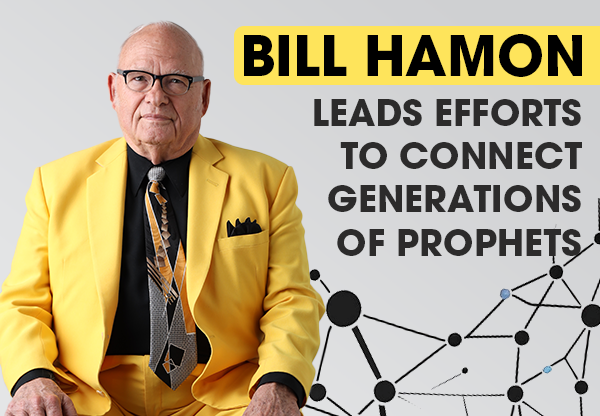
On May 26, I had the honor of interviewing Bishop Bill Hamon and Elizabeth Tiam-Fook on my livestream, Adventures in Prophecy.
Hamon, known as the “pioneer of the modern-day prophetic movement,” has dedicated his life to Connecting Generations of Prophets by teaching, training, and activating countless individuals in the prophetic realm through his work with Christian International.
The importance of different generations working together in prophecy
Tiam-Fook is the founder of International Young Prophets, which serves the office of the next generation prophet. I first met her during a conference in Norfolk, Virginia where I was later part of a prophetic roundtable with a medium sized group of prophetic voices in the Hampton Roads area.
During the special hour-long episode, I was struck at how Hamon and Tiam-Fook honored one another. They were modeling how important it is for each generation to run together. To pray, minister and prophesy together.
The example of Moses and Joshua
Moses and Joshua were of different generations, but they prayed together. Joshua would participate and see Moses’ prayer life as they were in God’s presence. But Joshua understood that even though Moses was God’s friend and spoke to Him face to face, he needed his own encounter and friendship with God. Joshua watched Moses carefully and applied the principles he saw in Moses, staying in the tent to pray.
We need generations of fivefold ministry gifts praying and ministering together. We should give our elders who lead us well double honor. And the young, emerging apostles and prophets should imitate those who have paid the price before them like Bishop Hamon. We should glean all the spiritual truths and wisdom we can and then seek God’s face for our own encounter.
It’s no secret that from the place of prayer we learn to prophesy. But when we are running together with generations in mind, I believe there is a supernatural acceleration and blessing.
The need for mutual respect and openness between generations in prophetic ministry
Tiam-Fook said each generation needs each other. Our generation needs the older generation, and together we need the younger generation. Unfortunately, there are ministries that won’t allow older, more experienced apostles and prophets to speak into their lives. But then there are some who won’t listen to anyone younger than they are. This should never be the case.
The power of intergenerational prophetic activation
At the end of the interview, I asked Hamon and Tiam-Fook to lead us in a prophetic activation. Encouraging those watching or later listening in to my podcast to participate. It was a powerful time as Hamon gave the scriptural foundations to be activated. And through this they modeled several generations working, ministering and running together.
I want to encourage you to consider who to run with in the generations before you or after you. And. reach out to them and start meeting with them today.
Listen to this episode on Adventures in the Spirit or watch Fireborn Ministries Facebook or YouTube.a